Curtain heading styles: S-fold, pinch pleat, pencil pleat and more
The heading is how the top of a curtain is made and hung. It decides how the folds fall, how the curtain stacks when it is open, and part of what it costs. Here is how the five headings we make compare.
| Heading | Look | Hangs from | Suits |
|---|---|---|---|
| S-fold (wave fold) | Even, continuous waves | An S-fold track | Modern homes, sheers, floor-to-ceiling curtains |
| Pinch pleat | Tailored and classic | A track or a rod | Formal living and dining rooms, heavier fabrics |
| Pencil pleat | Gathered and relaxed | A track or a rod | Bedrooms, and keeping the cost down |
| Inverted (box) pleat | Flat and crisp | A track or a rod | Contemporary rooms with a minimal look |
| Eyelet | Deep, soft folds | A rod | Casual rooms where curtains open and close often |
S-fold (wave fold)
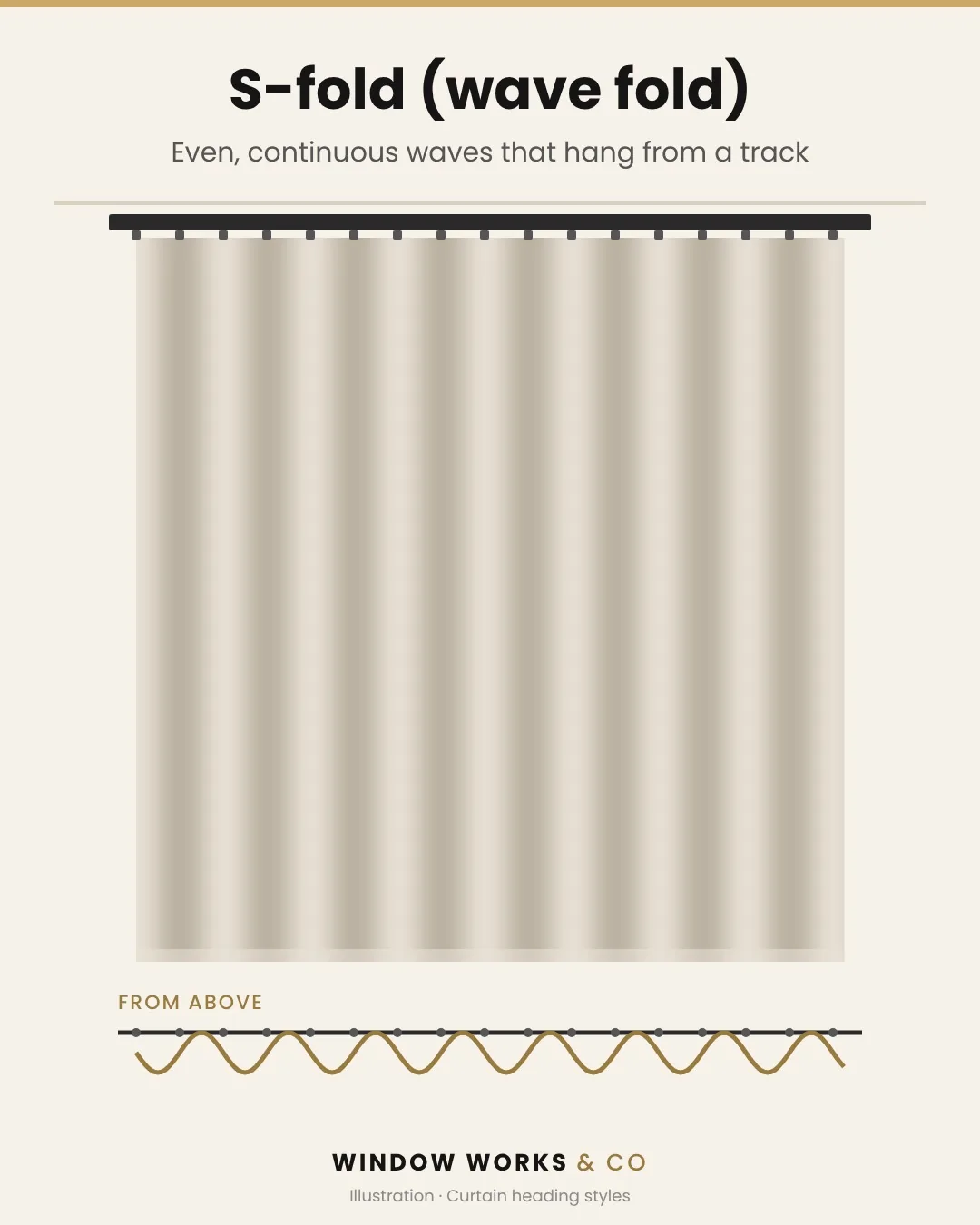
S-fold curtains hang from carriers clipped into an S-fold track. The carriers space the fabric evenly, so it folds back and forth in the same wave across the whole width and stacks neatly to the side when open. The look is clean and modern, and it suits sheers and floor-to-ceiling curtains especially well. See our S-fold curtains.
Pinch pleat
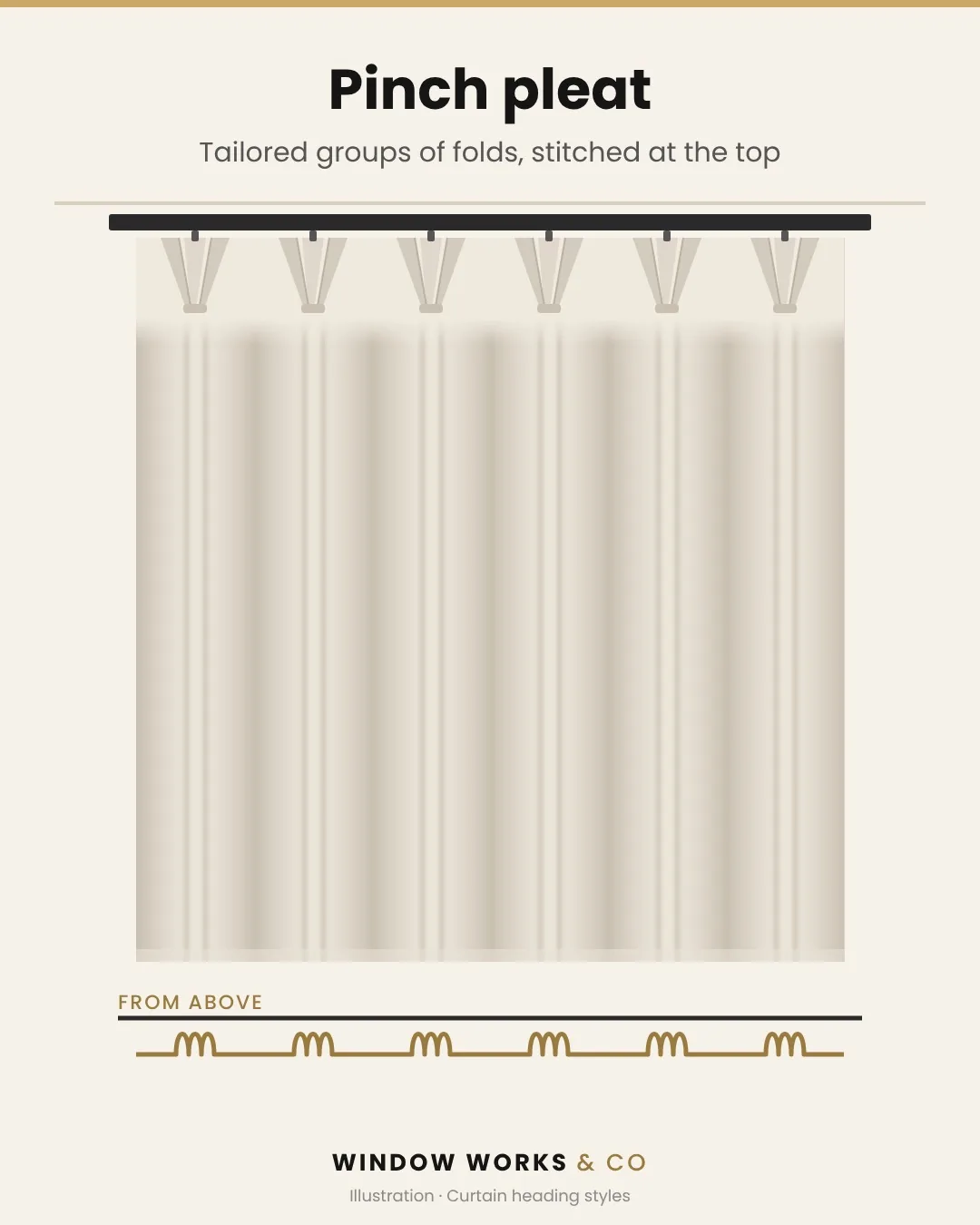
Pinch pleats gather the fabric into groups of two or three folds, stitched together near the top, with a flat section between each group. Below the stitching, each group falls into a full, rounded fold. It is a classic, tailored look that suits formal living and dining rooms and heavier fabrics.
Pencil pleat
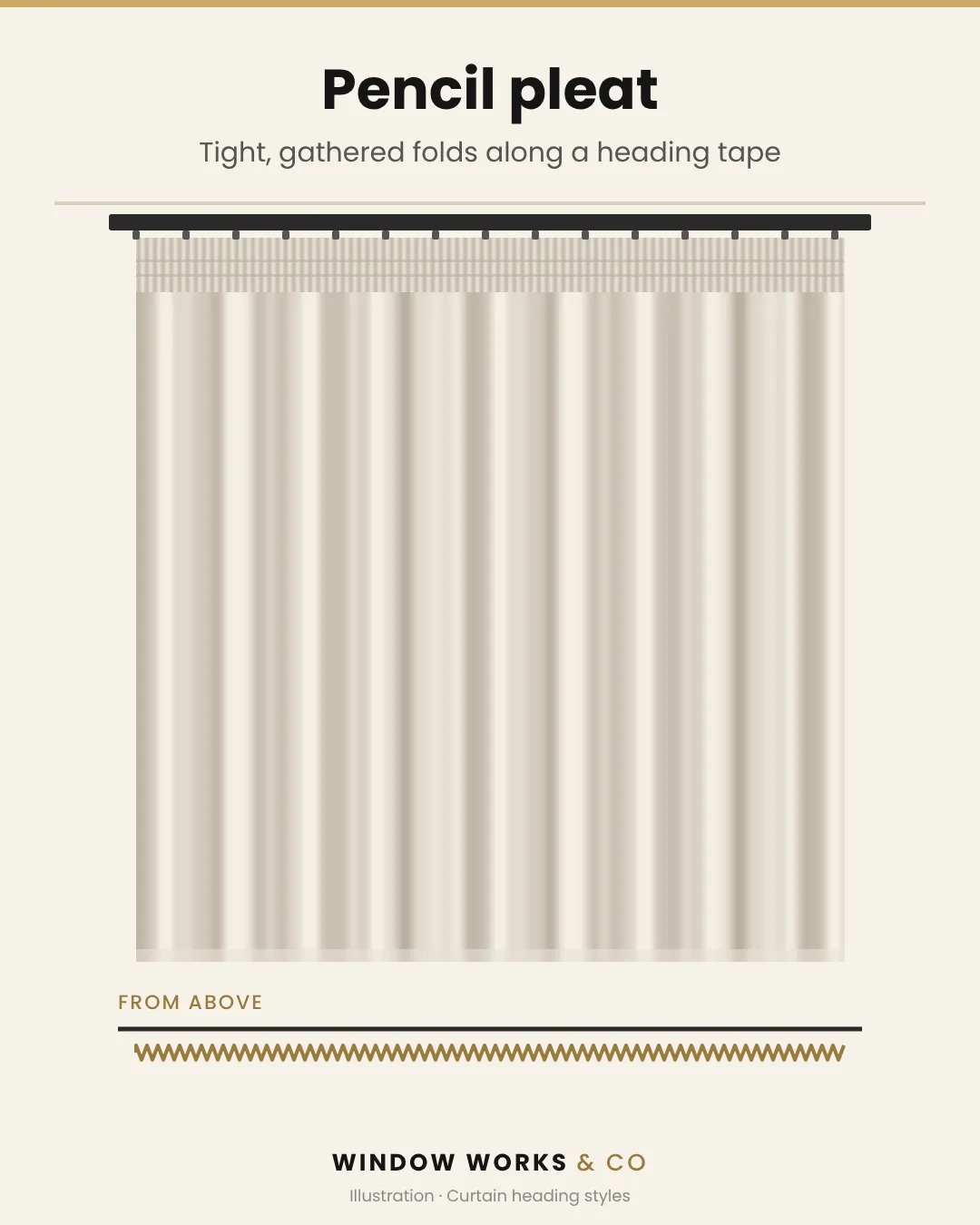
Pencil pleat curtains have a tape sewn along the top. Pulling its cords gathers the fabric into tight, even folds that look like a row of pencils. It is relaxed and practical, and usually the most budget-friendly heading because it is simpler to make.
Inverted (box) pleat
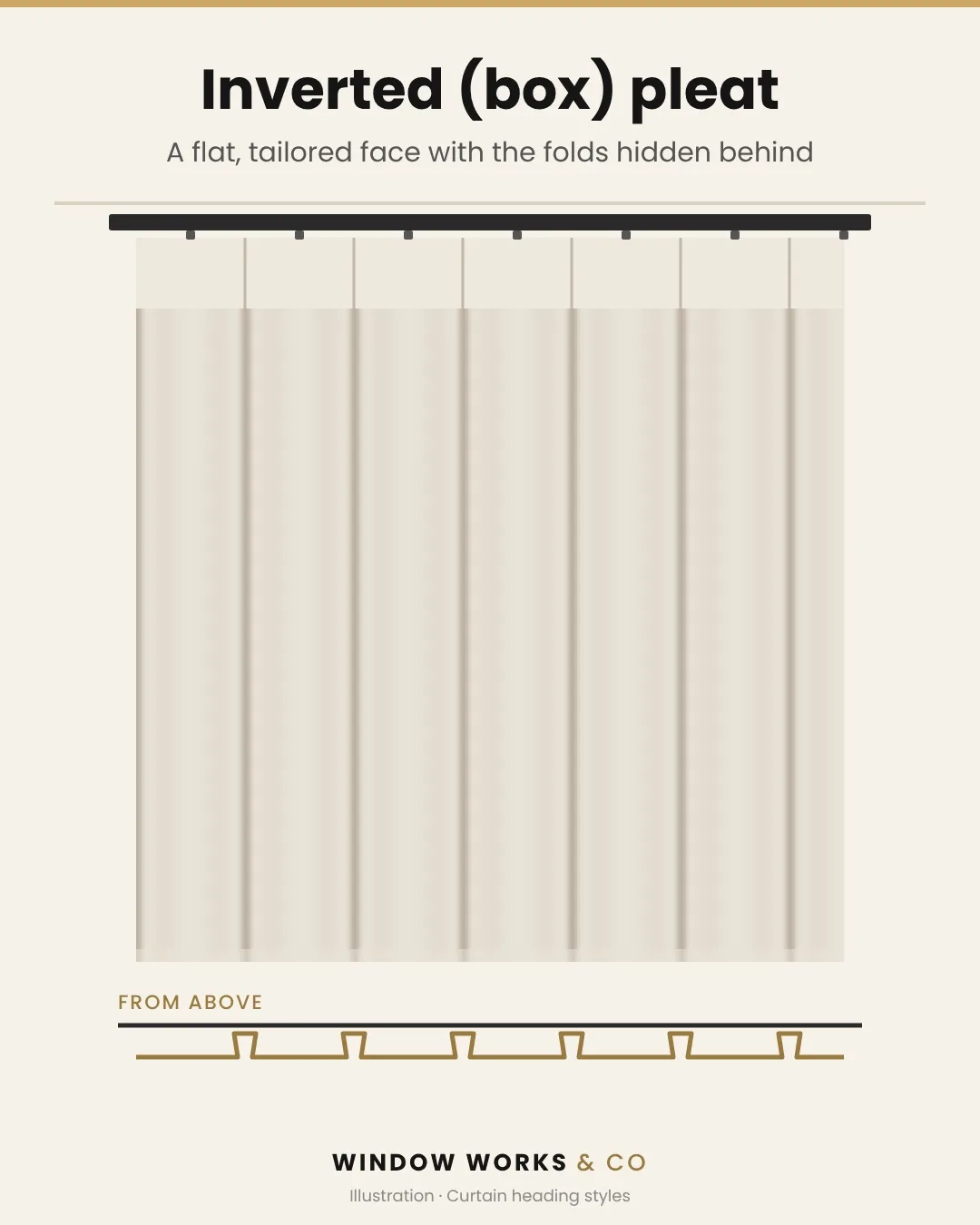
An inverted pleat folds the fabric behind the curtain at regular intervals, so the front stays flat and the folds are hidden. It gives a crisp, tailored finish that suits contemporary rooms and anyone who wants a minimal look.
Eyelet
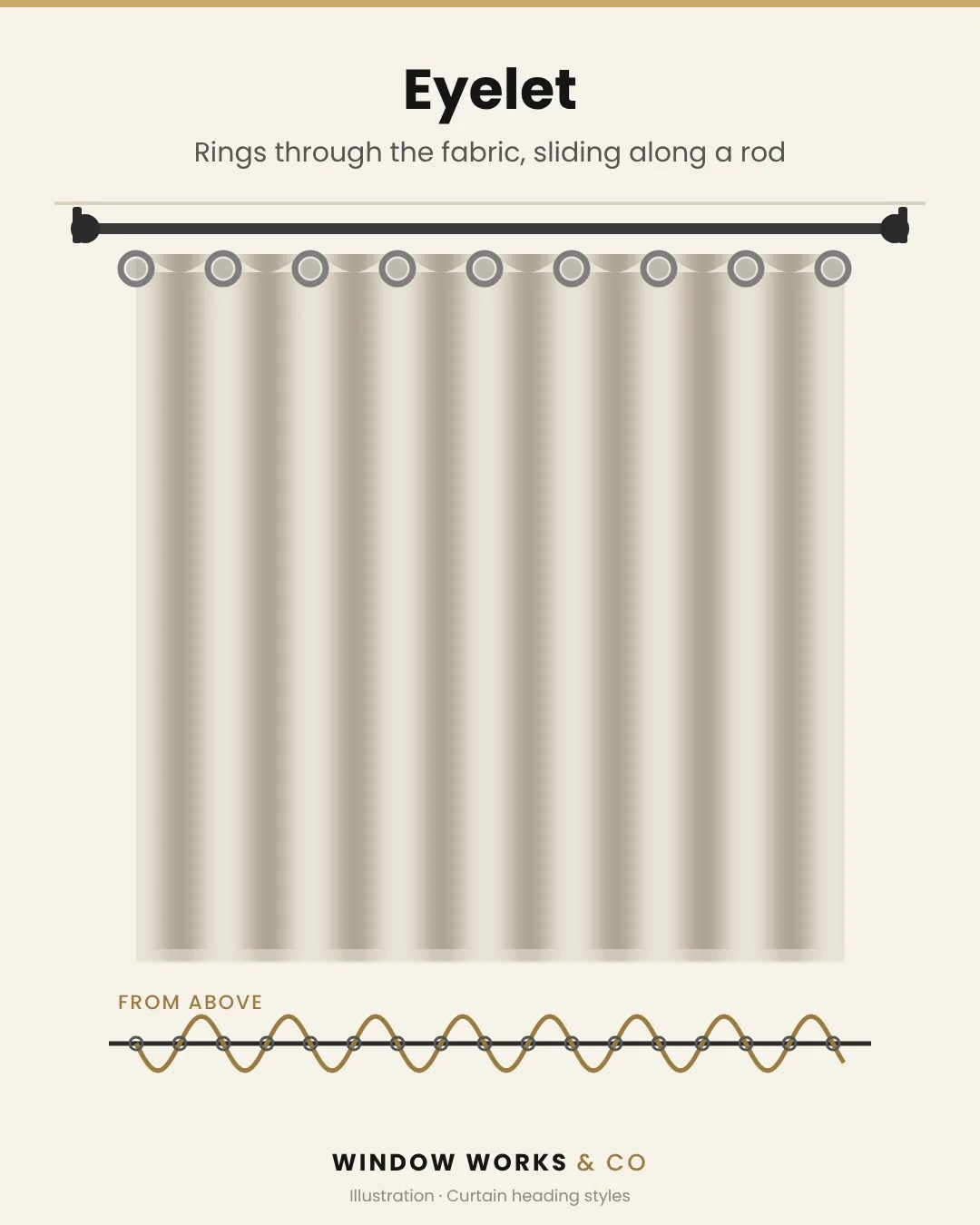
Eyelet curtains have rings set into the top of the fabric, which slide straight onto a rod. The fabric falls in deep, soft folds and moves easily, so eyelets suit rooms where the curtains open and close often. They need a rod rather than a track.
How to choose
- A modern look or floor-to-ceiling sheers: S-fold.
- A formal living or dining room: pinch pleat or inverted pleat.
- Keeping the cost down: pencil pleat.
- You already have a rod you like: eyelet.
Any of these headings can be made in sheer or blockout fabric. At your free measure and quote we bring fabric samples and talk you through which heading suits each window. For prices, see how much curtains cost in Sydney.
Book your free measure & quote
Tell us about your windows and suburb. We offer free in-home measure and quote appointments across Sydney and will contact you to arrange a suitable time. Send an enquiry any time and we will reply during business hours, Monday to Saturday, 7am to 7pm.
Prefer to email? info@windowworksandco.com.au